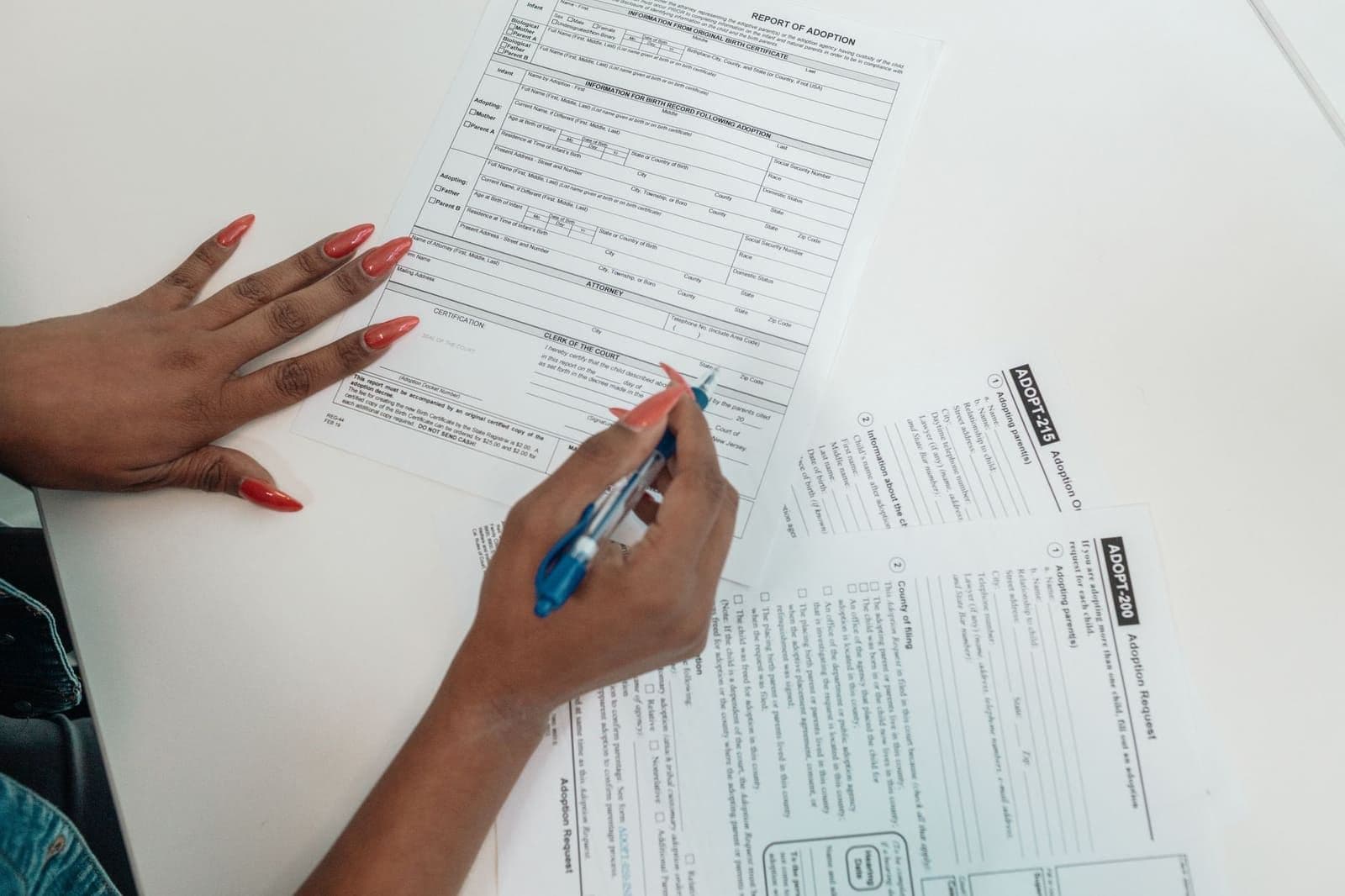
If you have just lost someone and you are looking at a life insurance policy, first, take a breath. Filing the claim is more straightforward than it looks, and there is no rush in the first day or two.
Here is the short answer on how to file a life insurance claim: contact the insurance company and ask for a claim form (sometimes called a claimant statement). You return that form with a certified copy of the death certificate. You do not need the original paper policy to begin. That is the whole core of it, and the rest of this page walks through each part gently.
Need to file a life insurance claim? A licensed professional can help you gather the documents, find the right claims department at the carrier and fill in the forms. Free, no obligation.
What to do first
The first step is the simplest one: tell the insurance company. You contact the carrier that issued the policy and ask them to send you a claim form, the short document that opens the claim. You do not need the original policy in hand, and you do not need to have everything organized before you call. Starting the claim is what sets the rest in motion.
There is no penalty for taking a few days. Most policies have no deadline to file, so the first day or two can be for family, not paperwork. When you are ready, gather what you can find: any policy paperwork, the insured person’s full legal name and date of birth, and the funeral home’s contact details. If you only have a company name and nothing else, that is still enough to begin.
The documents you need
Most claims come down to a short list. Here is what the carrier will ask for, and where each piece tends to come from:
- A certified death certificate. Not a photocopy, a certified copy with the official seal. The funeral home can usually order these for you, and asking for several copies at once is wise, since other accounts (banks, the Social Security office) will want their own.
- The insurer’s claim form. Also called a claimant statement or proof-of-death form. The carrier sends it to you once you reach out, and it asks for basic details about you, the insured person, and how you would like to be paid.
- Your identification as the beneficiary. A driver’s license or other government ID confirms you are the person named to receive the benefit. Some carriers also ask for your Social Security number for tax reporting on any interest.
- The policy number, if you have it. This is the one item that is helpful but not required. It lets the carrier pull the file in seconds. No number? They can still locate the policy by the insured person’s name, birth date, and Social Security number.
How to start the claim
There are two calm ways to begin, and neither is wrong. You can call the carrier directly, or you can let a licensed professional handle the call for you. Both lead to the same place.
Calling the carrier yourself. Look for a claims phone number on the policy paperwork, on the insurer’s website, or on a recent premium statement. Tell them you are reporting a death and would like to start a claim. They will confirm the policy, mail or email you the claim form, and tell you exactly where to send the form and the certified death certificate. Write down the name of the person you spoke with and any claim number they give you.
Letting someone help, at no cost. If making that call feels like one thing too many right now, that is completely understandable. A licensed professional can contact the carrier with you, request the form, explain each line, and follow up on the paperwork so you do not have to chase it. There is no fee for this, and a review that simply helps a family file is a good day for us. Because of the volume we do with over 20 carriers, we often have direct contacts at the company that can move a claim along.
Do not have the policy in front of you? You can still start. Give us the carrier name or what you know, and we will help track down the paperwork. Free, no obligation.
How the payout is made, and how long it takes
Once the insurer has your completed claim form and a certified death certificate, payment usually follows within a few weeks. Many claims are paid in about 14 to 30 days, and some sooner. Here is how the money typically comes, and what the timeline tends to look like:
| Payout option | What it is | How often chosen |
|---|---|---|
| Lump sum | The full death benefit in one payment, by check or direct deposit | Most common |
| Held account | The insurer holds the funds in an interest-bearing account you draw from | Optional |
| Installments | The benefit paid in scheduled payments over a set period | Optional |
Illustrative payout options for a typical life insurance claim, not a quote. Available options, timelines, and any interest vary by policy, carrier, and state. Most complete claims are paid within about 14 to 30 days.
Most beneficiaries choose the lump sum, a single payment of the full death benefit by check or direct deposit. Some carriers also offer to hold the funds in an interest-bearing account you can draw from, or to pay in installments over time. There is no wrong choice, and you can ask the carrier to walk through the options. For a closer look at the schedule, see our guide to how long a life insurance payout takes.
If you cannot find the policy
If you believe a policy exists but cannot find any paperwork, you still have clear options, and you are far from the only one. Money does sit unclaimed simply because a family did not know where to look. The National Association of Insurance Commissioners runs a free Life Insurance Policy Locator that searches participating companies for a policy in the deceased person’s name.
Other places to look: a checkbook or bank statements for premium payments, an employer’s benefits office for group coverage, old tax records, and the unclaimed-property office in the states where the person lived. Our full walkthrough on how to find a lost life insurance policy lays out each search in order, and a licensed professional can run several of them with you.
Common reasons a claim slows down, and how to avoid them
Most claims are paid without trouble. When one does take longer, it is usually one of a few ordinary reasons, and each has a simple way around it. Knowing them ahead of time keeps the process smooth.
- A missing or non-certified death certificate. A plain photocopy will not do; the carrier needs a certified copy with the seal. The fix: order certified copies from the funeral home, and send one with the claim form.
- An incomplete claim form. A blank signature line or a skipped beneficiary detail sends the form back to you. The fix: read each line, and ask the carrier (or a licensed professional) about anything unclear before mailing it.
- A death within the first two years. This is the contestability period, a window the insurer can use to confirm the application was accurate. It is routine, not a denial. The fix: simply respond to any document requests; most of these claims are still paid.
- An out-of-date beneficiary. If the named beneficiary has also passed away, the benefit moves to the contingent beneficiary listed on the policy. The fix: ask the carrier who is on file, so the right person files.
When to ask for help, and when you do not need us
Here is the honest part. If the policy is easy to find, you are clearly the named beneficiary, and the carrier is responsive, you may not need anyone at all. Call the company, send the form and the certified death certificate, and the payment will come. That is a perfectly good outcome, and we will tell you so.
The times it genuinely helps to have someone in your corner are narrower: when you cannot locate the policy, when more than one beneficiary is involved, when a claim has stalled past a few weeks, or when you simply do not have the bandwidth to make the calls right now. In any of those cases, a licensed professional can do the legwork with you, at no cost, and stay with it until the claim is paid. If you would rather start on your own and reach out only if you get stuck, that is completely fine too.
Free claim paperwork help
Get help with the claim, one step at a time.
Our team of licensed professionals will go through the steps with you and help with the forms. It costs nothing, there is no obligation, and you can take it at your own pace.
- Gathering the documents a claim needs
- Finding the right claims department
- Locating a policy if you cannot find it
- Beneficiary questions
Helping families since 2000. Licensed in all 50 states.
Mon-Sat · 10am-9pm
Questions people ask about filing a claim
01How do I file a life insurance claim?
Contact the insurance company and ask for a claim form, sometimes called a claimant statement. You will return that form along with a certified copy of the death certificate. You do not need the original paper policy to start. If reaching the carrier feels like a lot right now, a licensed professional can place the call with you and walk it through, at no cost.
02What documents do I need to file a life insurance claim?
Usually three things: a certified copy of the death certificate, the insurer’s completed claim form, and your own identification as the named beneficiary. The policy number helps the carrier find the file faster, but it is not required to begin. The funeral home can often provide certified death certificates, and ordering several copies at once saves time later.
03How long does a life insurance payout take?
Once the insurer has the claim form and a certified death certificate, many claims are paid within about 14 to 30 days, and some sooner. State law generally sets the outer limit on how long a carrier can take to act on a complete claim. The timeline can stretch if a document is missing or the death happened in the first two years of the policy, which is the contestability period.
04Do I need the original policy document to file a claim?
No. The original paper policy is helpful because it lists the policy number and the insurer, but it is not required. The carrier can locate the policy by the insured person’s name, date of birth, and Social Security number. If you cannot find any paperwork at all, there are free searches that can help you confirm whether a policy exists.
05How is a life insurance payout made?
Most beneficiaries take the death benefit as a single lump sum, paid by check or direct deposit. Some carriers also offer to hold the money in an interest-bearing account you can draw from, or to pay it out over time. A lump sum is the most common choice. The death benefit itself is generally not counted as taxable income, under the rule in IRC §101.
06What if more than one person is a beneficiary?
Each named beneficiary files their own claim and receives their own share, in the percentages the policy lists. One person’s claim does not have to wait on another’s. If a primary beneficiary has passed away, the benefit usually goes to the contingent beneficiary named on the policy. A licensed professional can confirm who is listed and help each person file.
07Is a life insurance claim ever denied?
It is uncommon, and most claims are paid. A claim can slow down or be questioned if it falls inside the two-year contestability period, if the application left out material health information, or if premiums had lapsed. Even then, there are often clear next steps. If a claim stalls, your state insurance department and a licensed professional can both help you sort it out. If a lapse is the stated reason, our guide on what to check when a lapse is the reason covers the grace period, lapse notices and the records to request.