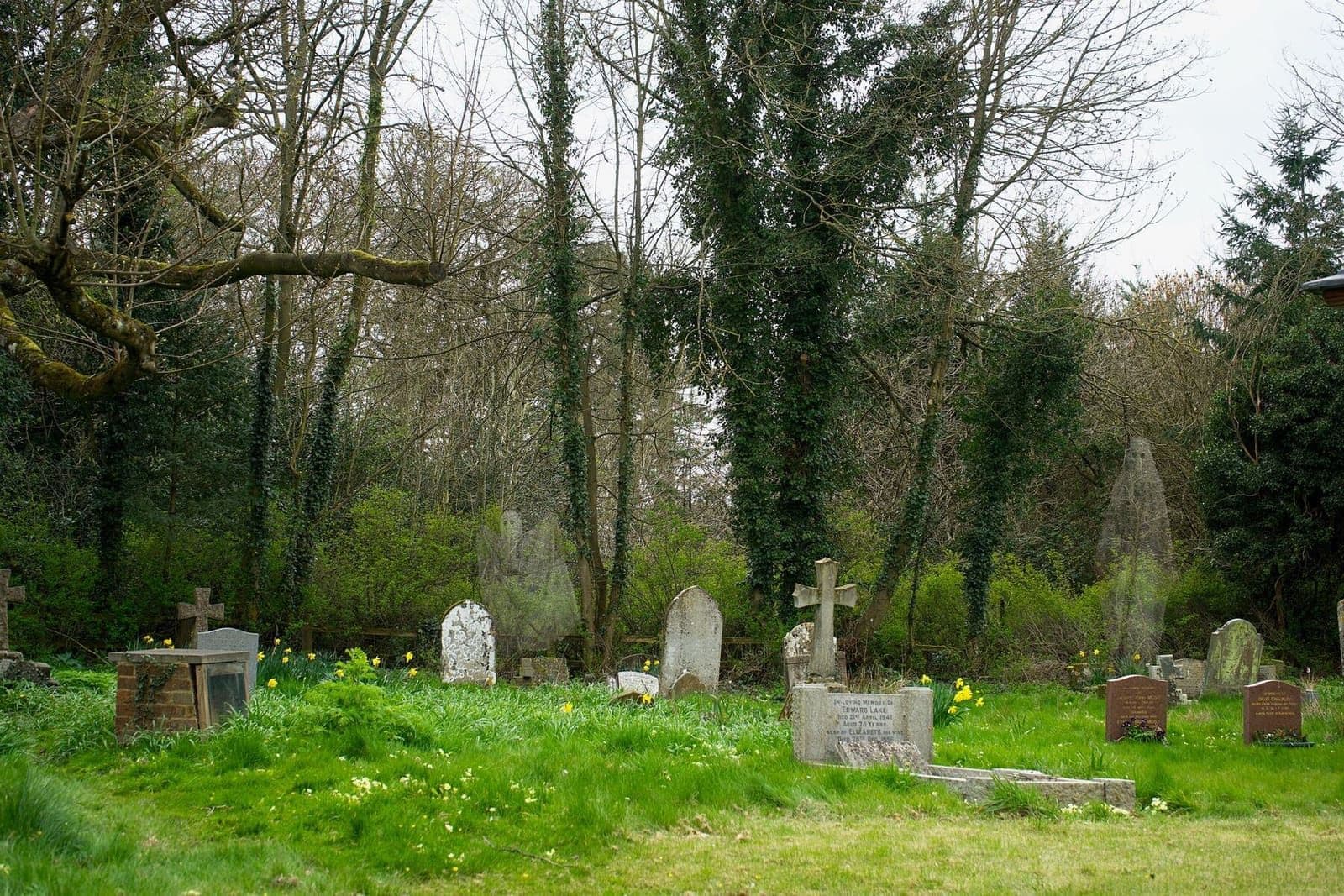
A daughter once told us her father asked to be buried under a maple, in a plain pine box, nothing sealed. She wanted to know what that would cost.
Here’s the short answer. Green burial cost is usually about $1,000 to $4,000 for the burial itself, with a full green funeral commonly running $2,000 to $5,000. That’s often less than a conventional burial, because green burial skips embalming, the metal casket, and the concrete vault. A green burial simply means returning the body to the earth with nothing that won’t break down naturally.
Planning a green burial? Plan how it is paid for too. A free, no-pressure conversation with a licensed professional, so your family never has to guess at the numbers.
The average green burial cost
The green burial itself typically runs $1,000 to $4,000, and a full green funeral (with a simple service, a biodegradable container, and the plot) commonly lands between $2,000 and $5,000. The range is wide for one reason: the cemetery. The plot is usually the single largest piece, and a green grave can cost anywhere from a few hundred dollars to several thousand depending on where you are.
For context, the National Funeral Directors Association puts the median funeral with a viewing and burial at about $8,300 in its 2023 study. A green burial often costs less than that, because the items that push a conventional bill up (embalming, a metal casket, a concrete vault) simply aren’t part of it. To see how a green burial fits the bigger picture, our guide to overall funeral costs walks through every line.
What you’re paying for
A green burial has fewer moving parts than a conventional one, which is part of the appeal. Here’s where the money actually goes:
| Green burial item | Typical cost |
|---|---|
| Cemetery plot (green ground) | $500 to $4,000+ |
| Biodegradable casket or shroud | $200 to $1,500 |
| Opening and closing the grave | $500 to $1,500 |
| Funeral home basic services | $1,000 to $2,500 |
| Natural grave marker (optional) | $100 to $1,000 |
Illustrative green burial costs, which vary by cemetery, container, and provider. National ranges; your area and chosen ground will differ. Median funeral figure for context: National Funeral Directors Association, 2023 General Price List Study.
The plot and the funeral home’s basic services fee are usually the two largest lines. Everything else is smaller and, in many cases, optional. A shroud costs less than a casket; a hand-dug grave at a small preserve may cost less than a mechanically dug one. None of these choices makes the goodbye less meaningful. they just keep the family in control of the total.
Green burial vs. a conventional burial
A green burial usually costs less than a conventional one, and the difference comes down to three items it leaves out. Embalming, the chemical preservation of the body, isn’t used. The casket is biodegradable wood, wicker, or cloth rather than sealed metal. And the burial vault, the concrete liner placed around a casket in most conventional cemeteries, isn’t required at a certified green ground.
Those three items often add up to several thousand dollars on a conventional bill. A metal casket alone runs a median of about $2,500, as our guide to casket costs covers. Take those away and the same dignified burial generally costs less, even before counting the plot. The tradeoff is fewer options for an open-casket viewing, since the body isn’t embalmed, though a brief viewing soon after passing is often still possible. Conventional prices also swing with location, which our state-by-state study of funeral and cremation cost by state lays out with sources.
Planning a green burial? Plan how it is paid for too. Talk it through with a licensed professional, no obligation, and you’ll get an honest read on your options.
Green burial vs. cremation: the honest comparison
Here’s where many families want a straight answer: a green burial is not always cheaper than cremation. A direct cremation (no service beforehand) is often the lowest-cost choice, frequently under $2,000. A green burial usually runs $1,000 to $4,000 for the burial plus the plot, so once cemetery fees are counted, it often lands a little higher.
| Option | Typical total |
|---|---|
| Direct cremation | ~$800 to $2,000 |
| Green burial (burial + plot) | ~$1,000 to $4,000+ |
| Conventional burial (median, with viewing) | ~$8,300 |
Illustrative totals, which vary by provider, region, and services chosen. Conventional median: National Funeral Directors Association, 2023 General Price List Study. Not a quote.
That said, a simple green burial can come close to cremation, especially at a small preserve with modest plot fees. And cost isn’t the only factor. Many families choose green burial for the idea of returning to the earth, or choose cremation for its flexibility. If you’re weighing the two, our cremation vs. burial comparison and our guide to cremation costs lay out both sides in the same plain detail.
Three kinds of green burial ground
Where you’re buried shapes the cost more than anything else. There are three common settings, and they price the plot differently:
- A hybrid cemetery. A conventional cemetery with a green section that allows vault-free, embalming-free burial. Often the most familiar and convenient, with plot prices in the same range as the rest of the cemetery.
- A natural burial ground. A cemetery dedicated to green burial, with no vaults and biodegradable containers only. Plots are commonly a few hundred to a couple thousand dollars, and graves are marked simply or with a flat natural stone.
- A conservation burial ground. Land protected as a nature preserve, where burial fees help fund permanent conservation. These can cost more (sometimes several thousand for the plot) because the fee supports the land in perpetuity.
How a green burial actually works
The process is simpler than many people expect. The body isn’t embalmed, so burial happens within a few days, often with refrigeration or dry ice to allow time for a small gathering. The body is placed in a biodegradable container (a plain wood or wicker casket, or a cloth shroud) and buried at a depth that supports natural decomposition.
No concrete vault goes into the grave at a certified green ground. Graves are often marked with a flat fieldstone, an engraved rock, or a GPS coordinate rather than a raised headstone, which keeps the land looking natural. Many grounds invite the family to help carry and lower the casket and to speak at the graveside, so the day tends to feel hands-on and personal rather than formal.
A simple way to decide
If you’re trying to settle between green burial and the alternatives, here’s a rule of thumb that cuts through it. Work down this list, and stop at the first answer that fits your family:
- 1.If returning to the earth matters most and an open-casket viewing isn’t important, a green burial fits. Budget $2,000 to $5,000 and start with a certified ground near you.
- 2.If the lowest cost matters most, a direct cremation is usually hard to beat, often under $2,000. A green memorial can still be held afterward.
- 3.If a traditional viewing and service matter most, a conventional burial may suit you better, since embalming allows an open casket.
- 4.If you’re unsure, get written price lists from two or three nearby providers before deciding. Funeral homes must give you an itemized list, so comparing is straightforward.
There’s no single right answer here, only the one that fits your family and your budget. A green burial is a calm, dignified choice, and so are the others.
Paying for it without strain
When you might not need to do anything: if you’ve already set money aside for end-of-life costs, or you have a life insurance policy large enough to cover a funeral with room to spare, you may not need anything new. A green burial is one of the more affordable choices, so existing savings often stretch further than people expect. In that case, the honest answer is to keep what you have.
If the money isn’t set aside, a small final expense policy is one calm option. It’s a modest whole life policy, often $5,000 to $25,000, meant to cover a funeral and the costs around it. The payout goes to your beneficiary as cash, with no rule on how it’s spent, so it works just as well for a green burial as a conventional one. If you already own coverage and aren’t sure it still fits, a quick policy review can confirm it before you change a thing.
Free · Unhurried · No pressure
Planning a green burial? Plan how it is paid for too.
A licensed professional will walk through your options for covering a green burial and the rest of a funeral (savings, pre-need, or a small policy) calmly and with no pressure. If you’re already set, you’ll hear exactly that.
- What final expense coverage can pay toward
- Claims paperwork if a loved one had a policy
- Planning ahead so costs are settled early
- Comparing plans for your age and health
Helping families since 2000. Licensed in all 50 states.
Mon-Sat · 10am-9pm
Questions people ask about green burial
01How much does a green burial cost?
The green burial itself usually runs about $1,000 to $4,000, and a full green funeral commonly lands between $2,000 and $5,000. That is often less than a conventional burial, because green burial skips embalming, the metal casket, and the concrete vault. Your actual total depends on the burial ground, the container you choose, and the services you add.
02Is a green burial cheaper than a conventional burial?
Usually, yes. The 2023 NFDA General Price List Study puts the median funeral with viewing and burial near $8,300, and much of that is the casket and the vault that green burial leaves out. A green burial removes embalming, the metal casket, and the concrete vault, so the same dignified goodbye often costs noticeably less.
03Is a green burial cheaper than cremation?
Not always. A direct cremation is often the lowest-cost option, frequently under $2,000, while a green burial usually runs $1,000 to $4,000 plus the plot. A simple green burial can come close to cremation once you account for the cemetery fees, so the right choice comes down to the cemetery, the services you want, and what feels right to your family.
04Do you need a casket or a vault for a green burial?
No. A green burial uses a biodegradable container (a simple wood or wicker casket or a cloth shroud) instead of a sealed metal casket. Certified green cemeteries do not require a concrete burial vault, which is one of the larger savings. Some conventional cemeteries that allow green burial may still ask for a grave liner, so it is worth confirming first.
05Does insurance cover a green burial?
A final expense life insurance policy can. It pays a cash benefit your family can use for any kind of funeral, green or conventional, with no restriction on how the money is spent. The payout goes to your beneficiary, who then pays the cemetery and funeral home directly. It is one calm way to make sure the money is there when it is needed.
06How do I find a certified green burial ground near me?
The Green Burial Council certifies cemeteries and funeral homes that meet its standards, and it keeps a public directory you can search by state. Certification tells you the ground genuinely allows no vaults, no embalming chemicals, and biodegradable containers. Calling two or three nearby providers for their price lists is the surest way to compare real numbers.